October to December in Tanzania: Your Guide to a Safari & Zanzibar Experience
Planning a Tanzania safari between October and December comes with more possibilities than many travellers realise. These months sit between Tanzania’s long dry season and the arrival of the short rains, bringing changes to the landscapes, wildlife patterns and overall feel of a safari. October can offer excellent game viewing, November begins to transform the scenery with fresh rain and greenery, while December brings a beautiful mix of wildlife, lush landscapes and the festive atmosphere of the holiday season.
And then there is Zanzibar.
For travellers who want more than a traditional game-drive holiday, October to December can be an excellent time to combine a Tanzania wildlife safari with a few days on the Indian Ocean. You can spend your mornings following elephants across the savanna and your afternoons exploring Swahili culture, relaxing on white-sand beaches or swimming in the turquoise waters of Zanzibar.
✅ Quick Overview
- October to December offer varied Tanzania experiences: These months sit between the long dry season and short rains, delivering excellent late-dry-season game viewing in October, greener landscapes and fewer visitors in November, and a festive, lush setup in December.
- Combine a Tanzania safari with a Zanzibar beach extension: Pair iconic Northern Circuit wildlife with days on the Indian Ocean for a dual-destination trip that adds Stone Town, spice tours and marine activities to your safari.
The official Tanzania Tourism Board describes Tanzania as a year-round destination where travellers can combine wildlife, beaches, culture and other experiences depending on the season and destinations they choose.
So, is October to December a good time to visit Tanzania? Yes, but each month offers something different.
Understanding those differences can help you choose the right Tanzania safari packages, safari destinations and Zanzibar experience for the kind of holiday you actually want.
October, November or December: What Can You Expect?
| Month | Safari Experience | Zanzibar Experience | Best For |
| October | Excellent late-dry-season game viewing and photography | Warm conditions and generally favourable beach weather | Wildlife lovers, photographers, couples and honeymooners |
| November | Short rains, greener landscapes and fewer visitors in some areas | Warm tropical conditions with possible showers | Green-season safaris, birdwatchers and travellers seeking a quieter experience |
| December | Green landscapes, birdlife and rewarding game viewing | Beach holidays and festive-season travel | Families, couples, honeymooners and Christmas/New Year holidays |
If your priority is wildlife viewing, October may appeal most. If you love green landscapes and a quieter atmosphere, November can be particularly rewarding. If you want to combine a Tanzania safari and Zanzibar holiday with the festive season, December can be an attractive choice.
Why Combine a Tanzania Safari with Zanzibar?
A safari and beach combination is one of the easiest ways to experience the incredible variety of Tanzania in one holiday.
Your journey could begin in the north, exploring the Northern Circuit Tanzania and its famous safari destinations such as Tarangire National Park, the Ngorongoro Crater and Serengeti National Park. After days of game drives, you can fly to Zanzibar and slow the pace down completely.
But Zanzibar is much more than a beach extension. Travellers can explore historic Stone Town, visit spice farms, take dhow cruises, go snorkelling or diving, enjoy local Swahili cuisine, explore the island’s cultural heritage or simply spend a few days enjoying the beach.
That makes Zanzibar a natural complement to a Tanzania safari and beach holiday, particularly for:
- Honeymooners looking for a private safari followed by a romantic beach stay
- Families who want wildlife, culture and relaxation in one trip
- Couples looking for adventure followed by downtime
- Luxury travellers combining high-end safari camps with an island resort
- First-time visitors who want to experience both mainland Tanzania and Zanzibar
The result is a holiday with two very different rhythms: the excitement of the African bush followed by the slower pace of the Indian Ocean.
October in Tanzania: The End of the Dry Season
October is an especially interesting month for a Tanzania safari because it marks the end of the long dry season before the short rains become more established.
Across the Northern Circuit, destinations such as Serengeti National Park, Ngorongoro Crater and Tarangire National Park remain excellent choices for game viewing.
The relatively dry conditions can make wildlife easier to locate around available water sources, while thinner vegetation can provide good visibility during game drives. This makes October particularly appealing to travellers whose main priority is wildlife.
October and the Great Migration
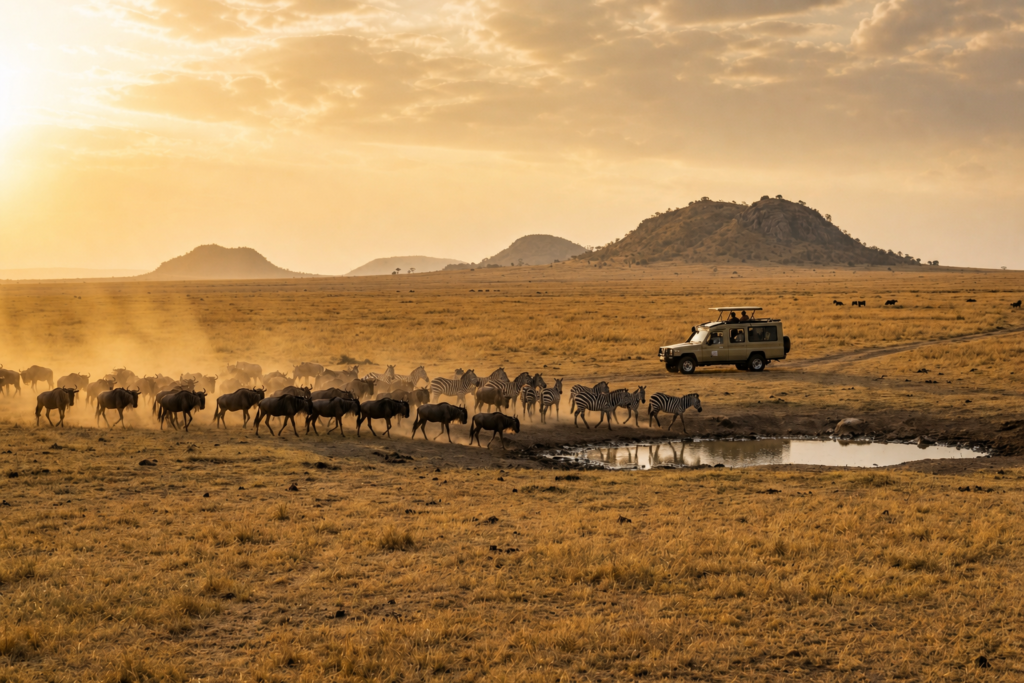
October can also be an interesting time to follow the Great Migration, particularly in the northern Serengeti.
However, this is one area where it is important not to treat wildlife as though it has received a calendar invitation.
The migration is a natural movement influenced by rainfall, grazing conditions and water availability. The exact location of the herds can therefore vary from year to year.
The UNESCO World Heritage Centre’s Serengeti profile describes the annual movement of millions of wildebeest together with hundreds of thousands of gazelles and zebras as one of the world’s most impressive natural spectacles.
This is why experienced safari planning focuses not only on when you travel, but also on where within the Serengeti ecosystem you stay.
October is particularly good for:
- General wildlife viewing
- Big Five safaris
- Great Migration experiences
- Wildlife photography
- Private Tanzania safaris
- Luxury safari experiences
- Honeymoon safaris
- Combining safari with Zanzibar
October in Zanzibar
October can also work beautifully for the Zanzibar portion of your trip.
After several days of game drives, this can be the perfect contrast. Instead of waking up before sunrise to search for wildlife, you can start your day with the sound of the ocean, spend the afternoon exploring the island and finish with a sunset over the Indian Ocean.
For a Tanzania honeymoon safari, this combination is particularly appealing: adventure first, relaxation afterwards.
A popular October combination
5-7 days Tanzania safari + 3-5 days Zanzibar
A classic Tanzania safari and Zanzibar package could follow:
Tarangire → Ngorongoro Crater → Serengeti → Zanzibar
This gives travellers a taste of elephant-rich Tarangire, the concentrated wildlife of Ngorongoro, the vast landscapes of the Serengeti and finally the beaches and culture of Zanzibar.
For travellers who prefer more flexibility, a private safari in Tanzania allows the route, accommodation, activities and pace to be tailored around their interests.
October is therefore a strong option for travellers who want a classic Tanzania safari tour combined with an Indian Ocean escape, without having to choose between wildlife and the beach.
November in Tanzania: Green Landscapes, Wildlife & a Quieter Safari
November brings the beginning of Tanzania’s short rains, known locally as Vuli in areas with a bimodal rainfall pattern. The showers are generally part of a seasonal transition rather than a reason to rule out a safari altogether.
For travellers who don’t mind the possibility of short rain showers, November can be one of the most rewarding times to experience a different side of Tanzania. The dry, golden landscapes begin to turn green, the skies become more dramatic, and the first rains bring fresh vegetation across the plains.
What makes November different?
The changing landscape is one of November’s biggest attractions.
After months of relatively dry conditions, the arrival of rain stimulates new plant growth and creates a noticeably greener environment. This can make the scenery particularly beautiful for photographers, while the increased activity around wetlands, lakes and other water sources makes the period interesting for birdwatchers.
Tanzania is also an important destination for migratory birds. The Tanzania Tourism Board highlights the green season as a particularly rich period for birding, with migratory species joining resident birds across wetlands, lakes, forests and coastal habitats.
For travellers who have already experienced a classic dry-season safari, November can therefore offer something quite different.
November is best for:
- Green landscapes and dramatic skies
- Wildlife photography
- Birdwatching
- Travellers who prefer quieter safari periods
- Returning safari travellers
- Private Tanzania safari experiences
- Nature and eco-travel
- Travellers looking for a different side of the Northern Circuit
Does the rain affect game viewing?
It can, but not necessarily in the way first-time safari travellers expect.
Rain may temporarily affect road conditions or change animal behaviour, and some game drives may be interrupted by a heavier shower. However, the short rains are often intermittent, and wildlife doesn’t disappear because the clouds arrive.
In fact, the changing conditions can create some memorable safari moments. Fresh green vegetation, dramatic skies, newborn wildlife in some areas and fewer vehicles around sightings can make November particularly appealing to travellers who value the overall experience rather than simply ticking animals off a list.
Where should you go in November?
For a Northern Circuit Tanzania safari, Serengeti, Ngorongoro and Tarangire remain strong choices, but the experience can vary considerably depending on where you travel.
The Serengeti is especially interesting because November coincides with an important period in the broader migration cycle. In the southern Serengeti and Ndutu area, the arrival of the short rains contributes to the movement of herds towards the southern plains, although exact wildlife locations naturally vary with rainfall and grazing conditions.
For travellers interested in combining several parks, Tarangire National Park → Ngorongoro Crater → Serengeti National Park remains a strong route.
And if you’re looking beyond the Northern Circuit, November can also be an opportunity to consider Southern Tanzania, where destinations such as Nyerere National Park and Ruaha National Park offer a more remote style of safari.
November in Zanzibar
November brings the short rains to Zanzibar as well, so this is where we need to be honest with travellers: it is not a month to promise uninterrupted sunshine every day.
The island remains warm and tropical, but showers can occur. For many travellers, however, the rain does not prevent them from enjoying Zanzibar. A shower can pass relatively quickly, leaving plenty of time for beach activities, cultural excursions, dining and exploring.
The broader Tanzanian climate has regional variation, with the October-December short-rain period particularly relevant to northern and coastal areas.
That makes November better suited to travellers who are comfortable with some weather flexibility and would rather experience Zanzibar at a potentially quieter time than insist on guaranteed blue skies.
You can spend your days exploring Stone Town, visiting spice farms, enjoying a dhow cruise, diving or snorkelling when sea conditions allow, and leaving plenty of time for simply enjoying the beach.
November is a good match for travellers who:
Want greener scenery: The landscape becomes noticeably more vibrant after the rains.
Enjoy photography: Dramatic skies, fresh vegetation and changing light can create beautiful conditions.
Prefer a quieter atmosphere: Some areas can feel less busy than during the peak dry-season months.
Don’t mind flexibility: A little patience around passing showers can be rewarded with a very different Tanzania experience.
Want value: November can be worth considering for travellers comparing different accommodation and travel options outside the busiest periods.
Safari + Zanzibar in November
November can work particularly well for travellers who want to slow down the pace rather than pack every day with activities.
A 5-7 day Tanzania safari followed by 3-5 days in Zanzibar gives you enough time to experience the wildlife without rushing into the beach portion of the trip.
A possible itinerary could be:
Tarangire → Ngorongoro → Serengeti → Zanzibar
For a more relaxed journey, the safari can be shortened or customised around your priorities, particularly for family safari Tanzania, honeymoon and private travel.
The beauty of a Tanzania safari and Zanzibar package is that even if you encounter a shower during one part of your journey, the trip still has plenty of different experiences to offer. Wildlife, landscapes, culture and the coast all become part of the story rather than the entire holiday depending on perfect weather.
November isn’t about chasing perfect weather. It’s about experiencing Tanzania as the landscape changes.
December in Tanzania: Green Landscapes, Wildlife & Festive Zanzibar
December brings a fresh rhythm to Tanzania safaris. The short rains have transformed many parts of the landscape, bringing new vegetation, greener plains and dramatic skies, while wildlife remains active across the country’s national parks.
For travellers, December can be particularly rewarding because it combines the beauty of the green season with the beginning of the festive travel period. You can enjoy a Tanzania wildlife safari during the day and end your holiday on the beaches of Zanzibar, surrounded by warm Indian Ocean waters and a lively Christmas and New Year atmosphere.
What Makes December Different?
By December, the landscape in many safari areas has become noticeably greener. The fresh vegetation creates beautiful scenery and can make this an excellent time for photography, especially when combined with dramatic skies and softer light.
The rains also bring renewed activity across the ecosystem. Birdlife becomes particularly interesting, with migratory species joining Tanzania’s resident birds, while herbivores benefit from the availability of fresh grazing.
The Serengeti is especially interesting during this period as the wildebeest herds begin gathering in the southern plains. The exact timing depends on rainfall and grazing conditions, but December can mark the beginning of the build-up towards the famous calving season that usually peaks between January and March.
December is Best For:
- Green-season Tanzania safaris
- Wildlife and landscape photography
- Birdwatching
- Experiencing the southern Serengeti
- Travellers interested in the beginning of the calving-season build-up
- Families travelling during the holidays
- Couples and honeymooners
- A festive Tanzania safari and Zanzibar holiday
What Can You See on Safari in December?
December can still provide excellent wildlife viewing across Tanzania.
The Ngorongoro Crater remains a particularly reliable destination because its resident wildlife is present throughout the year. Serengeti National Park offers the possibility of following the migration as the herds move towards the southern plains, while Tarangire National Park provides its own combination of elephants, baobabs and diverse wildlife.
The changing vegetation can make the safari experience feel very different from the dry-season months. Rather than the golden, dusty landscapes often associated with peak-season Tanzania, travellers can encounter fresh green plains, dramatic cloud formations and a landscape full of new life.
This is also an excellent period for birdwatching. Migratory birds join resident species across Tanzania’s different habitats, making the green season particularly appealing to travellers who want more than the traditional Big Five experience.
December and the Wildebeest Calving Season
December is worth mentioning for travellers interested in the Great Migration, but with an important distinction.
The main wildebeest calving season generally takes place between January and March, particularly around the southern Serengeti and Ndutu plains. December is more of a transition into this period, as the herds begin gathering in the southern Serengeti following the arrival of the short rains.
This means December can offer an opportunity to experience the beginning of one of the most exciting periods in the Serengeti, but travellers specifically focused on newborn wildebeest and the intense predator activity around the calving season may prefer to travel later.
As always with the migration, rainfall and grazing conditions influence where the herds are found, so exact wildlife movements can never be guaranteed.
December in Zanzibar
After a Tanzania safari, Zanzibar offers a completely different way to spend the rest of your holiday.
December is warm and tropical, making the island an attractive option for travellers looking for beach time, water activities and a festive atmosphere.
You can explore Stone Town, visit spice farms, enjoy a dhow cruise, go snorkelling or diving when conditions are suitable, or simply spend your days on the beach.
For travellers visiting around Christmas and New Year, Zanzibar can also feel particularly lively, with hotels and resorts offering festive meals, celebrations and special experiences.
The end of December is therefore a popular period for Tanzania honeymoon safari packages, family holidays and luxury safari and Zanzibar experiences. Travellers planning to visit during Christmas and New Year should, however, expect higher demand for accommodation and flights.
Why Choose December for a Tanzania Safari & Zanzibar Holiday?
December is a good choice for travellers who want to experience Tanzania during its greener, more vibrant season while combining wildlife with an Indian Ocean escape.
It works particularly well if you are looking for:
- A greener safari landscape
- Excellent birdwatching
- Photography opportunities
- The southern Serengeti and migration build-up
- A festive holiday atmosphere
- Warm beach days in Zanzibar
- A combination of adventure and relaxation
It may not offer the consistently dry conditions associated with the June-to-October period, but that’s part of what makes December different.
Tanzania in December is about new life, changing landscapes and a completely different side of the safari experience.
Planning Your Tanzania Safari & Zanzibar Experience
A successful Tanzania safari and Zanzibar holiday is about more than choosing the right month. A few practical decisions can make the experience much smoother.
Pack for Changing Conditions
October to December can bring different weather conditions across Tanzania, so packing versatile clothing is important. Lightweight, breathable clothing works well during the day, while a warm layer is useful for early-morning game drives. A light waterproof jacket or rain shell is particularly useful during November and December.
For safari, neutral-coloured clothing, comfortable walking shoes, sunscreen, sunglasses, insect repellent and a good camera are practical essentials.
Allow Flexibility
Short rains can arrive quickly, particularly in November and December. They don’t necessarily disrupt a safari, but flexibility is important. A shower can change road conditions, wildlife behaviour and the atmosphere of a game drive, sometimes creating some of the most memorable moments of the trip.
Choose Your Safari Style
Your travel style should also influence where you go and how you travel.
A private Tanzania safari offers greater flexibility over game-drive timing, destinations and pace, while a luxury safari can combine premium camps and lodges with personalised experiences. Families may benefit from shorter driving times and carefully selected accommodation, while photographers may prefer more time in key wildlife areas.
Plan the Zanzibar Extension Carefully
After your safari, Zanzibar can provide the perfect change of pace. Consider whether you want your stay to focus mainly on beaches or include Stone Town, spice tours, marine activities and cultural experiences as well.
If travelling around Christmas and New Year, booking accommodation and domestic flights early is particularly important because demand increases during the festive period.
Ultimately, good planning gives you room to enjoy both sides of the journey: the excitement of the African safari and the slower rhythm of Zanzibar.
Making the Most of Your Tanzania Safari & Zanzibar Experience
October to December offers a different perspective on Tanzania. From the wildlife-rich plains of the Serengeti and Ngorongoro to the greener landscapes of the short-rain season and the beaches of Zanzibar, these months can bring together some of the country’s most memorable experiences.
Whether you are planning a private Tanzania safari, a family adventure, a Tanzania honeymoon safari, or a luxury safari and beach escape, the key is choosing the timing and destinations around the experience you want.
Tanzania does not have one perfect safari season for everyone. Sometimes, the best time to visit is simply the time that fits the journey you have been dreaming about.
Frequently Asked Questions
1. What should I expect from a Tanzania safari between October and December?
October generally offers excellent late-dry-season wildlife viewing, while November and December bring greener landscapes, short rains and increased birdlife. Wildlife viewing remains rewarding throughout the period, but conditions can vary between regions.
2. Is October to December a good time to combine a Tanzania safari with Zanzibar?
Yes. This period can work very well for a Tanzania safari and Zanzibar holiday, allowing travellers to combine wildlife, nature and culture on the mainland with beaches and Indian Ocean experiences in Zanzibar.
3. Can I visit Zanzibar after my safari?
Absolutely. Zanzibar is a natural extension to a Tanzania safari, offering beaches, Stone Town, spice tours, marine activities and plenty of opportunities to slow down after several days of game drives.
4. What is the best safari experience for October to December?
That depends on your priorities. October is particularly appealing for wildlife-focused travellers, November for those who enjoy greener landscapes and a quieter atmosphere, and December for travellers looking to combine safari with the festive season and Zanzibar.
Ready to Experience Tanzania?
From the savanna to the sea, October to December offers plenty of ways to experience Tanzania.
At Let’s Discover Africa, we create personalised Tanzania safari tours, private safaris and safari-and-Zanzibar experiences designed around your interests, travel style and time of year.
Your Tanzania adventure starts with choosing the right experience.