The Great Migration is one of the most powerful wildlife events on earth and one of the main reasons travelers visit Serengeti National Park. Every year more than 1.5 million wildebeest, together with zebras and gazelles, move across the Serengeti ecosystem in search of fresh grass and water. This continuous movement is driven by rainfall and the growth of new grazing land, creating a natural cycle that has existed for thousands of years in Tanzania.
Great Migration Tanzania: January to March Calving Season
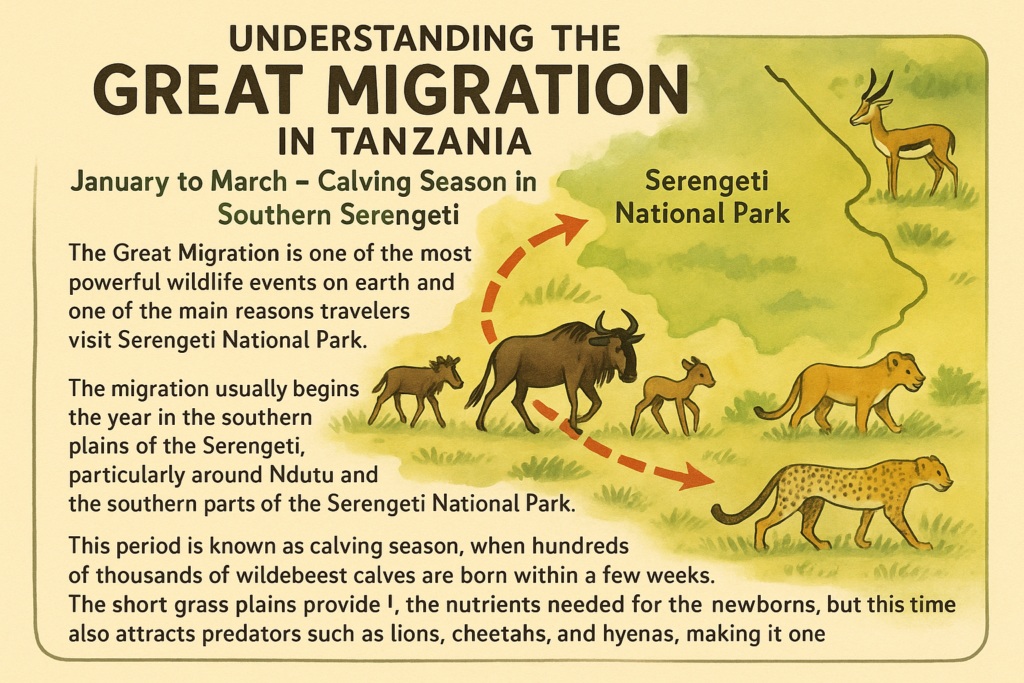
The migration usually begins the year in the southern plains of the Serengeti, particularly around Ndutu and the southern parts of the Serengeti National Park. This period is known as calving season, when hundreds of thousands of wildebeest calves are born within a few weeks. The short grass plains provide the nutrients needed for the newborns, but this time also attracts predators such as lions, cheetahs, and hyenas, making it one of the most dramatic wildlife viewing periods for a Tanzania safari.
Great Migration Tanzania: April to June Movement
As the rains continue and the grass begins to change, the herds slowly move northwest across the Serengeti. Large groups of wildebeest gather and travel through the central areas of the park before reaching the Western Corridor near the Grumeti River. This part of the Great Migration Tanzania journey is known for massive moving herds and the beginning of the long trek toward new grazing areas.
Great Migration Tanzania River Crossings in Northern Serengeti
During mid-year, the herds travel further north through the Serengeti and reach areas close to the Mara River in the northern Serengeti. River crossings often happen during this time and are among the most dramatic moments of the migration. Crocodiles wait in the water while thousands of animals attempt to cross, creating one of the most famous wildlife scenes in Africa.
October to December – Return to the Southern Plains
As the short rains begin again, the migration starts moving back south toward the Serengeti plains. The herds travel through central areas of the park before returning once more to the southern grasslands where the cycle will begin again with the next calving season.
What Is Happening Now (March–May)
Between March and May, the herds begin moving away from the southern plains of Serengeti National Park after the calving season. Large groups of wildebeest gradually travel through the central Serengeti and start heading toward the Western Corridor. During this time, visitors can see long lines of animals moving across the green plains, offering a quieter but impressive view of the Great Migration as it continues its journey through the Serengeti ecosystem.
Come to Tanzania with Let’s Discover Africa and be a witness of a natural wonder of the world.
FAQ
What is the Great Migration in Tanzania?
The Great Migration in Tanzania is a remarkable annual wildlife event where over 1.5 million wildebeest, zebras, and gazelles move across the Serengeti ecosystem in search of fresh grass and water, driven by seasonal rainfall and the growth of new grazing land.
How does the migration journey progress from April to June?
Between April and June, the herds slowly migrate northwest across the Serengeti towards the Western Corridor near the Grumeti River, marking the beginning of their long trek towards new grazing areas.
What happens during October to December in the Great Migration cycle?
From October to December, as the short rains start again, the herds migrate back south towards the Serengeti plains, completing the cycle and returning to the southern grasslands for the next calving season.
Browse our African Travel Blog for detailed guides.