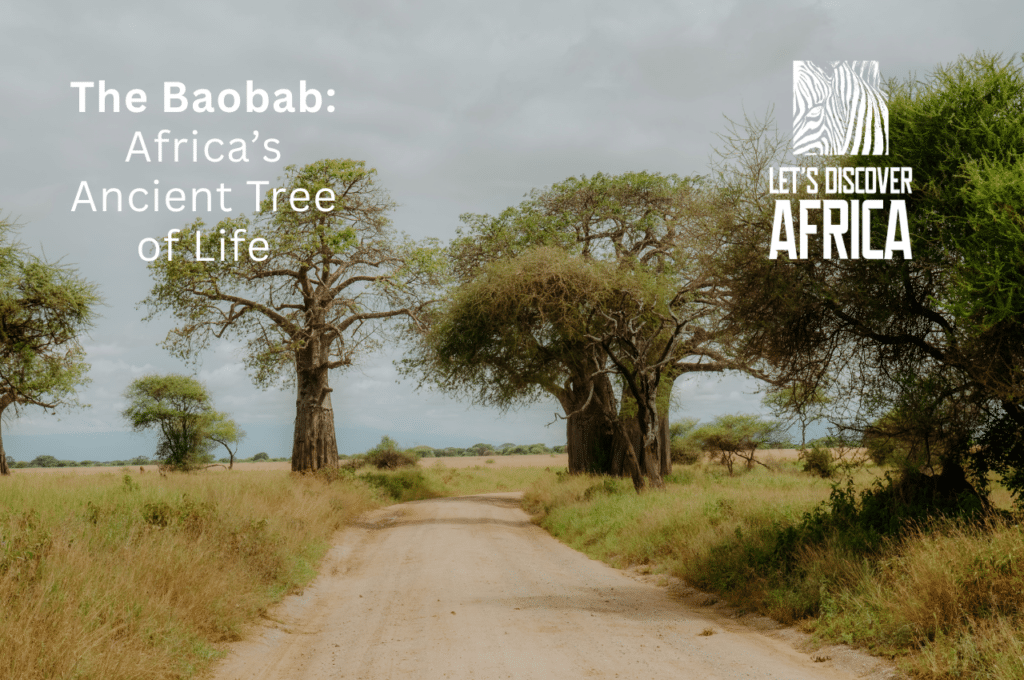
The Baobab: Consider a baobab tree a sign of African resilience. This incredible tree grows big and tall in some of the harshest conditions. Baobabs are primarily found in Africa.
Baobab Tree in Africa: History, Facts and Symbol of Resilience
As you plan your once in a lifetime visit to the African continent, here are a few interesting facts about the baobab to keep you company.
Baobab Tree History and Longevity in Africa
The Tree of Life has been around for millions of years. Scientists trace its lineage back about 20–40 million years, making it one of Africa’s most ancient trees. Individual baobabs live for generations, with some proven to be over 2,000 years old, silently watching centuries of history unfold beneath their branches.
Baobab Tree Water Storage and Survival in Drought
Baobabs have an almost magical ability to survive drought. Depending on size, a single tree can store up to 120,000 liters of water in its swollen trunk. This water reservoir not only keeps the tree alive but also provides relief to wildlife such as elephants, who dig into the bark during the dry season.
Baobab Fruit Uses: Food, Ubuyu and Nutrition Benefits
Ever heard of “ubuyu”?
Welcome to East Africa and have a taste of what giant African tree produce. In the streets of Zanzibar, for instance, you’ll find baobab fruits sold in vibrant colors, coated with sugar and spices. The pulp-covered seeds can also be ground into flour or eaten raw, offering a tangy punch of Vitamin C—six times more than an orange.
Baobab Myths and Legends in African Culture
Folklore says the gods planted the baobab upside down, which is why its branches look like roots pointing at the sky. In other stories, spirits live inside its hollow trunks, making it a sacred meeting point. For many, cutting down a baobab is unthinkable—bad luck follows those who dare.
Baobab Trees as a Living Heritage in Africa
In Zanzibar, recent studies mapped over 8,500 ancient baobab and found many stand near old Swahili settlement sites. These trees act as living markers of history, tied to spiritual places, community boundaries, and cultural memory. A baobab is never just a tree—it’s often part of the story of the people living around it.
Famous Baobab Trees in Africa: The Ombalantu Baobab
The Ombalantu Baobab in Namibia is a striking example of how versatile this tree can be. Standing around 800 years old, its hollow trunk has been used as a chapel, a post office, a shop, and even a refuge in times of conflict. Today, it is a heritage site, reminding us how baobabs have sheltered both body and spirit for centuries.
Plan Your African Safari Experience
Africa is a never-ending discovery. This continent has an unimaginable wealth of tourist attractions, our primary goal is to make sure we connect you with the most unique experiences. Escape the boring, you deserve unmatched excitement.
Baobab Tree FAQ
What makes the baobab a symbol of African resilience and longevity?
The African savannah tree has been around for millions of years, with scientists dating its lineage to about 20–40 million years ago, making it one of Africa’s most ancient trees. Individual baobabs can live for generations, with some proven to be over 2,000 years old, witnessing centuries of history beneath their branches.
How much water can a baobab store and why is this important?
Baobabs can store up to 120,000 liters of water in their swollen trunks, an adaptation that helps the tree survive drought and also provides a water source for wildlife such as elephants during dry seasons.
What edible uses does baobab have and what is ubuyu?
Baobab fruits are sold in places like Zanzibar and can be eaten in various forms; the pulp-covered seeds can be ground into flour or eaten raw. Ubuyu refers to baobab products in East Africa, which offer a tangy Vitamin C boost—six times more than an orange.